
What’s new
Spring 2020:
We are seeing increased California oak moth caterpillar activity in several counties this year. Most of our calls are coming from the Carmel, Monterrey, Capitola, Santa Cruz and Portola Valley areas. Call us at
831-425-1833 or 650-269-0540 to discuss treatment strategy and/or schedule a treatment.
Certified Soil Foodweb Advisor

Tree Solutions, Inc. is pleased to announce that our certified arborist James Neve has successfully completed training required to become a qualified Soil Foodweb Advisor. More
Tree Solutions Fall Newsletter
Topics include:
- Tree Solutions comments about expected ensuing SOD outbreaks
- New fungicide approved for Sudden Oak Death treatment
- Soil Restore-born from a desire to reverse practices causing chemical pollution in our environment
- Links to reference article concerning “dead zones” created by farming practices
Look for us at the upcoming Garden Faire.
Tree Solutions staff loves to get out and meet you face to face. Come enjoy the sunshine in Scotts Valley at The Garden Faire to be held at Skypark on Saturday, June 26, 2010.
Tree Solutions Spring Newsletter
Tree Solutions is proud to introduce it’s first HTML newsletter. We have posted our print version for those of you who would like to print and enjoy at your leisure.
If you would like to sign up for our newsletter see the bottom right of any of our web pages.
In this issue:
- Oak Tree Care Tips
- Soil Fertility and landscape management
- New Pests
- SOD Update – The latest recommendation from Matteo Garbelloto lab
- Least Toxic Pesticides
Tree Solutions Winter Newsletter
Topics Include:
- On the Value of Trees – from the Arbor Day Foundation
- Saving your Heritage Tree on the Central Coast
- Fruit Tree Tips
- Winter Season Recommendations
Tree Solutions Fall Newsletter
Topics Include:
- Things to do in the Fall
- Soil Restore: The Chemical Free Fertilizer Solution
- Sudden Oak Death: A Complex Issue
Tree Solutions Summer Newsletter
Topics Include:
- Maintaining Tree Health Through the Drought
- Mulch Benefits
- Proper Irrigation
- Pruning
- Soil Compaction
Pest Alert: Myoporum Thrips-
September 2009
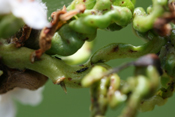
A new invasive insect species that is causing severe disfiguration of Myoporum trees. The pest species is new to our area and is very aggressive and the leaf distortion damage is extensive.
- First found in southern CA in 2005, Hawaii and the Bay area in 2008
- Native to Australia and New Zealand
- Causes severe galling of leaves
- Effective control strategies have been established
- Important to treat early in life cycle to obtain best results
Contact Tree Solutions staff if you need more information and/or think your trees are infested by this pest.
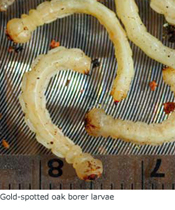
NEW PEST IDENTIFIED: Gold spotted oak borer:
First detected in San Diego County in 2004 by the California Department of Agriculture, this borer is causing extensive mortality to oak trees growing in the Cleveland National Forest in southern California. This pest primarily affects coast live oak, black oak, canyon oak. These are the primary oak species of the Central California coastal mountains. Currently, its distribution is still limited to southern California, but due to the high tree mortality potential of this pest, Government officials are concerned about its spread northward. The most common form of spread is by firewood transportation. See our crib notes from the 2009 SOD Science Symposium.
Site monitoring for this and other known pests and diseases is essential for urban landscapes. Pro active management is the best tool to prevent tree mortality.